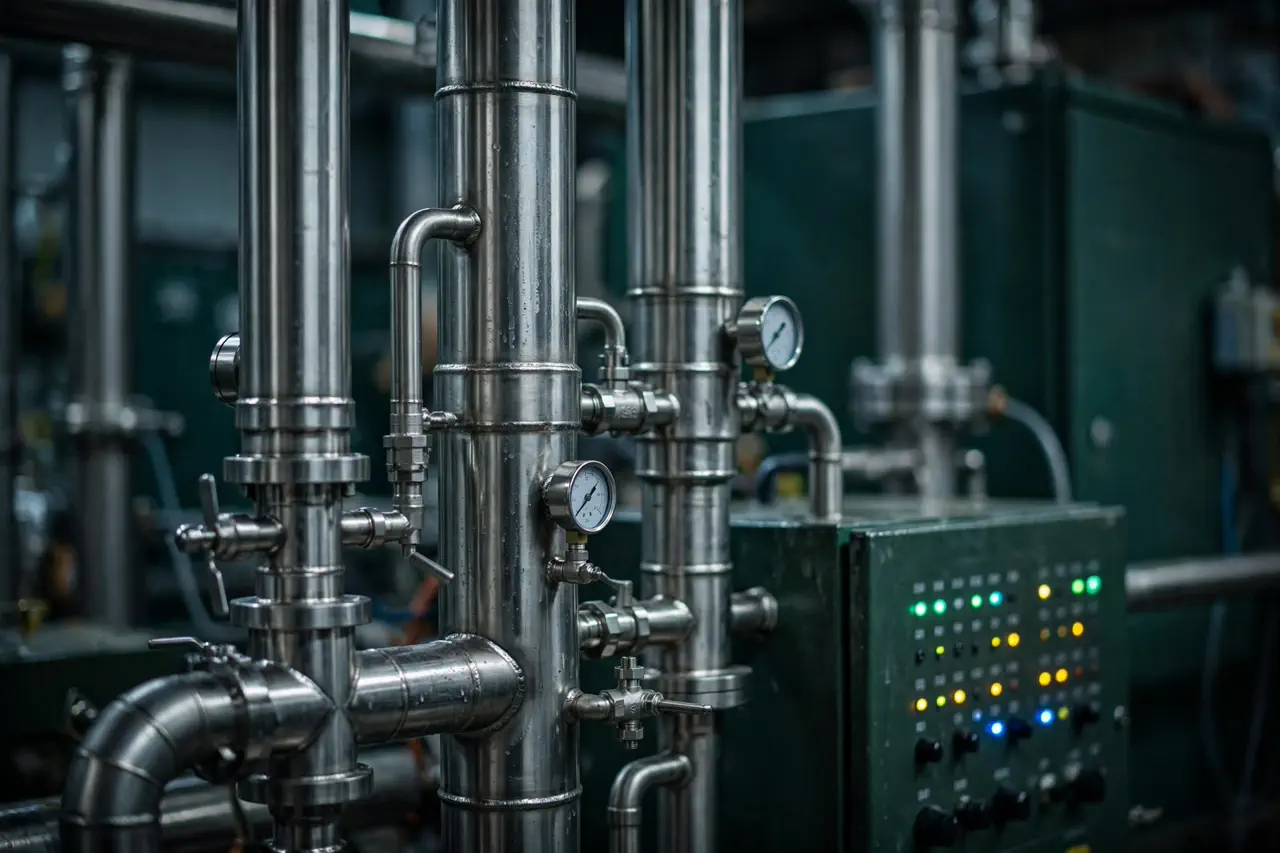
Stainless steel extraction columns and control panels
Home / Regulatory Intel
State-by-state GMP requirements

In some states, GMP is not optional.

There is no single national cannabis GMP rulebook. But a growing group of state programs expressly require GMP controls, federal food or supplement standards, third-party audits, or documented validation for defined license types and products.

Manufacture food, supplements, cosmetics, or pet food instead? Your GMP rulebooks are federal — food & beverage, supplements, cosmetics, and pet food each get the same validation discipline, mapped to their regulations.

THE RULES

Your license may depend on more than a passing test result.

A certificate of analysis does not replace controlled procedures, qualified equipment, training records, batch traceability, investigations, CAPA, or proof that a critical process repeatedly performs as intended. The trigger and scope vary by state, product, and license.

New York

Processor GMP plus third-party audit

Adult-use and medical cannabis products must be processed to applicable GMP standards. Many processors must submit proof of a qualified third-party GMP audit within one year of commencing licensed operations and again at renewal.

9 NYCRR 123.6 / 113.12 ↗
New Jersey

GMP and validated critical processes

Manufacturers must follow applicable 21 CFR Parts 110 and 210 practices, document manufacturing, and record and validate critical processes for finished-product strength, quality, and purity.

N.J.A.C. 17:30-11.12 ↗
California

Dedicated manufacturing GMP article

Licensed manufacturers operate under 4 CCR Article 4, covering quality control, premises, equipment, personnel, components, manufacturing procedures, product quality plans, and records.

4 CCR §§17207–17217 ↗
Nevada

Minimum GMP across the operation

NCCR Regulation 10 establishes written production and process controls, quality-unit authority, environmental controls, equipment requirements, sanitation, deviation records, and recordkeeping.

NCCR Regulation 10 ↗
Michigan

21 CFR Part 117 for edible producers

Producers of edible marijuana products must comply with current GMP, hazard analysis, and risk-based preventive controls for human food under 21 CFR Part 117.

R 420.403(8)(a) ↗
New Mexico

Part 117 controls for edibles and topicals

Class II, III, and IV manufacturers of edible and topical products must follow specified sections of 21 CFR Part 117, with controlled records available for official review.

16.8.6.10 NMAC ↗
Ohio

Written good manufacturing processes

Effective January 1, 2026, cultivators and processors must establish, maintain, and follow written policies for safe, sanitary, and clean cannabis cultivation and manufacturing.

OAC 1301:18-4-01 ↗
Maryland

GMP, validation, stability, and CAPA

Processors of concentrates and infused products must build SOPs around GMP, complete a validation process, test each unique lot, support expiration dating, and investigate repeated pathogen findings.

COMAR 14.17.11.04 ↗
Massachusetts

Food GMP for edible production

Adult-use and medical edible production must comply with the sanitation requirements in 105 CMR 500.000, Good Manufacturing Practices for Food.

935 CMR 500.130 / 501.130 ↗
Washington

GMP for cannabis extract processors

Processors creating extracts must develop SOPs, good manufacturing practices, and a training plan before producing extracts for the marketplace.

WAC 314-55-104(12) ↗
WHERE “VALIDATION” IS EXPLICIT

Do not overclaim the rule. Do not underbuild the evidence.

Few cannabis rules use the word “validation” directly. Where they do, the requirement is specific. Elsewhere, CQV and CSV may still be the strongest way to demonstrate control, reduce risk, and satisfy customer or audit expectations.

01
New Jersey — critical processes

N.J.A.C. 17:30-11.12(a)(6) requires critical processes to be recorded and validated. State enforcement materials also quote an equipment-validation requirement in N.J.A.C. 17:30-11.3(e). Official NJ-CRC memo ↗

02
Maryland — processor validation process

COMAR 14.17.11.04B requires successful completion of a validation process before each unique lot is tested by a registered independent laboratory.

03
California — laboratory methods, not manufacturing processes

4 CCR §15713 requires licensed testing laboratories to validate analytical methods. That is not the same as a blanket process-validation mandate for manufacturers.

Recent changes are raising the documentation burden.

These developments create an immediate reason to update rule crosswalks, procedures, training, validation files, and inspection-response plans rather than relying on last year’s compliance package.

FDA and FTC warning letters

Federal agencies warned companies selling copycat delta-8 THC foods and cited labeling and FD&C Act concerns—evidence that hemp-derived product safety and marketing remain active federal enforcement areas.

FDA release ↗

Maryland processor rule

Maryland adopted a framework tying GMP procedures to an explicit validation process, lot testing, certificates of analysis, stability evidence, and later corrective-action requirements.

Current COMAR text ↗

New Jersey rule amendment

The amended manufacturing rule retained the link to federal GMP provisions and the requirement to record and validate critical processes.

Current rule text ↗

Ohio GMP rule took effect

Ohio’s dedicated cultivator and processor good-manufacturing-process rule became effective, adding a direct reason to formalize sanitation, personnel, facility, and production controls.

Authenticated OAC rule ↗

California regulations revised

The current DCC compendium keeps a dedicated GMP article for manufacturers and detailed method-validation requirements for licensed laboratories.

DCC regulations ↗

Massachusetts rules updated

The current adult-use and medical regulations continue to require edible production under the state’s food GMP and sanitation framework.

CCC regulations ↗

Regulatory note: Examples verified from source text available September 24, 2026; this is not an exhaustive 50-state survey or legal advice. Requirements differ by license, product, and activity and can change quickly. A state’s incorporation of an FDA regulation does not mean FDA has approved or certified a state-licensed cannabis facility. Confirm current obligations with the issuing agency and qualified counsel.

Don't let the first gap be found under pressure.

Start with a confidential readiness conversation.