Vendor Manuals Passed Off as Protocols
The manufacturer's FAT/SAT documents were filed as qualification. They prove the vendor's equipment works — not that your process performs on it, in your facility, with your utilities.
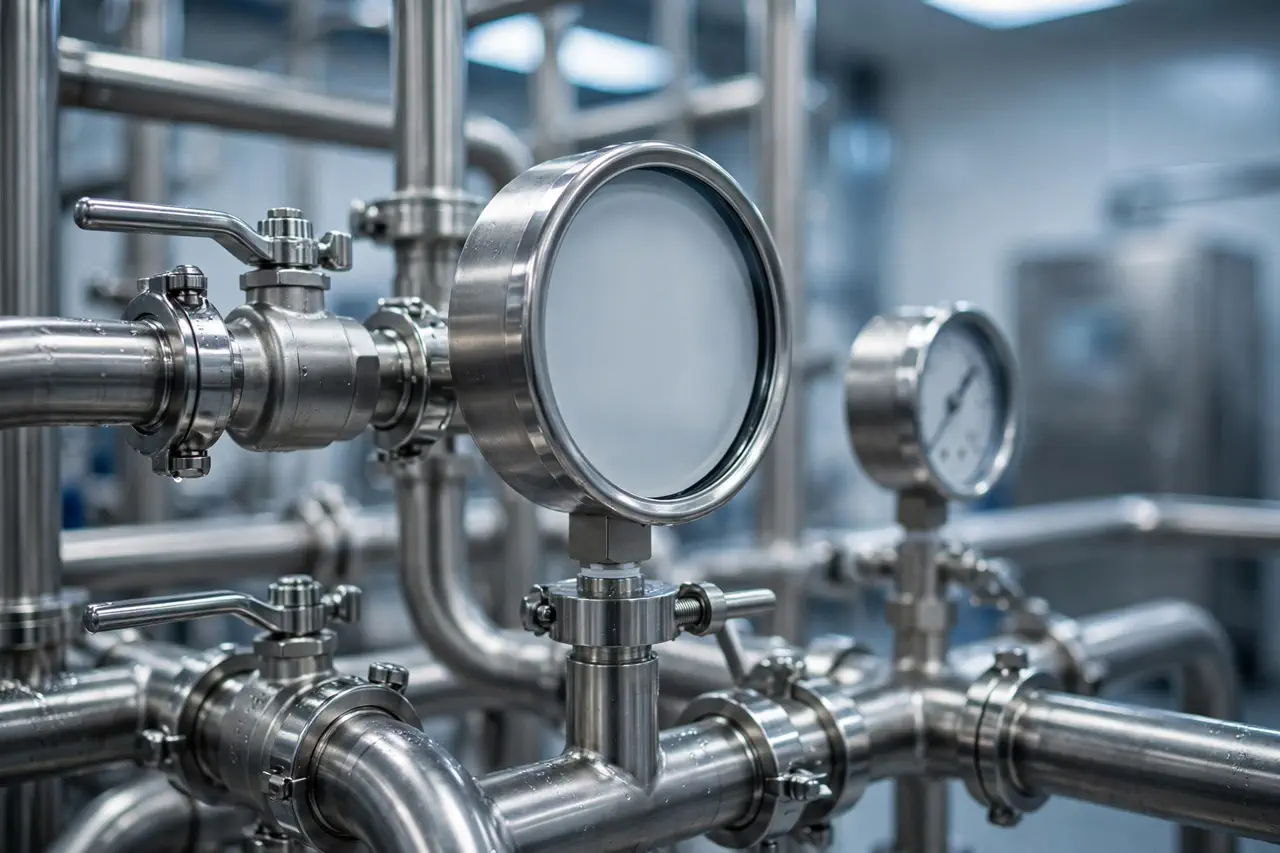
An oven, a retort, a CIP skid, a packaging line — every piece of equipment your process depends on needs the same three proofs: installed as designed, operating across its range, performing consistently under real conditions. We develop and execute IQ/OQ/PQ protocols that test the equipment you actually run, not the brochure version.
Each phase answers a different question. Skipping one doesn't save time — it borrows trouble.
Qualification packages that look complete — until someone who knows the equipment reads them.
The manufacturer's FAT/SAT documents were filed as qualification. They prove the vendor's equipment works — not that your process performs on it, in your facility, with your utilities.
Operational qualification ran the equipment at its comfortable setpoints. Alarms, interlocks, and worst-case conditions were never tested — so the first real challenge happens during production.
Performance qualification was a single campaign years ago. Since then: new products, changed parameters, replaced parts — and no requalification to prove the state still holds.
Instruments were calibrated on one schedule and qualified on another, with no link between them. An out-of-tolerance instrument quietly invalidates the qualification it supported.
We write protocols your team can actually execute, support the execution, and close the discrepancies honestly — so the package survives review.
IQ/OQ/PQ protocols written against your URS and risk assessment — clear acceptance criteria, defined sampling, and steps sequenced for the floor, not the desk.
On-the-floor support during execution: directing testing, witnessing critical steps, and keeping documentation contemporaneous instead of reconstructed.
Deviations investigated to root cause with justified dispositions — retest, repair, or accept with rationale. No pencil-whipping, no buried failures.
Requalification triggers and schedules tied to change control, calibration, and preventive maintenance — so the qualified state doesn't expire silently.
Cannabis is our home base — the method was built there first. The same evidence discipline serves each industry below, mapped to its own regulations.
Preventive controls, supplier verification, environmental monitoring, and traceability under 21 CFR Part 117 and FSMA.
Component qualification, master manufacturing records, and laboratory controls under 21 CFR Part 111.
Safety substantiation, GMP records, and adverse-event readiness under MoCRA.
Preventive controls for animal food, supplier programs, and sanitation under 21 CFR Part 507.
As a starting point, not a substitute. Vendor testing doesn't cover your installation, your utilities, your process, or your operating ranges. We leverage vendor packages to reduce redundant testing — then qualify the rest.
It depends on equipment complexity and readiness, not on a fixed template. A single skid with good documentation moves in weeks; a full line with gaps takes longer. We scope honestly after a short assessment — never by guessing.
Not necessarily. We use worst-case and bracketing approaches — qualify the hardest-to-make product or the bounding conditions, with a documented rationale for what the PQ covers.
Retrospective qualification: we assess what's known, test what's critical, and build a justified qualified state from evidence — documenting exactly what was proven and what was assessed by history.
Yes. Execution support is on-site work — directing tests, witnessing critical steps, and managing discrepancies in real time. Document development and review run remotely.
Start with a free call about your equipment — what's qualified, what's thin, and what an inspector would challenge first. We'll name your top 3 GMP risks and give you an honest fit assessment. No pressure, no pitch.