Unvalidated Spreadsheets
QC calculations and batch computations live in Excel files with no validation, no version control, and no access restriction. One broken formula, and the data behind it is indefensible.
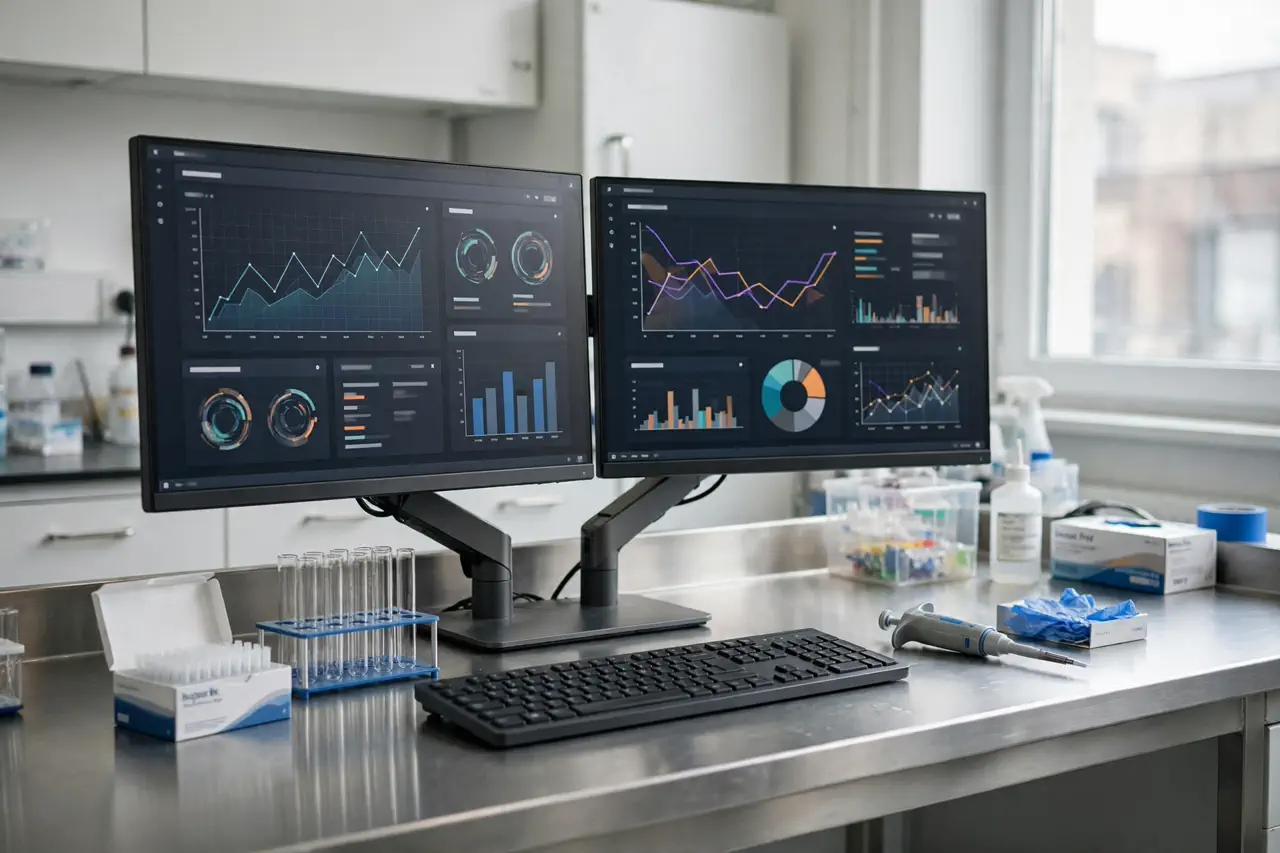
Your batch records, lab results, and environmental data live in software — spreadsheets, LIMS, monitoring platforms, ERP. If that software was never validated and its audit trails are never reviewed, your records are assertions, not evidence. We bring a risk-based GAMP 5 approach sized for mid-size manufacturers: enough rigor to satisfy an inspector, none of the enterprise overhead.
Inspectors increasingly start at the keyboard, not the clipboard. These are the pressure points we assess first.
Different plants, same pattern. Each one turns defensible records into findings.
QC calculations and batch computations live in Excel files with no validation, no version control, and no access restriction. One broken formula, and the data behind it is indefensible.
The laboratory and environmental-monitoring systems were installed, configured, and put to work — but requirements were never written and testing never documented. The system works; the proof doesn't exist.
Part 11 requires audit trails to be reviewed, not merely switched on. Nobody looks at them until an inspector asks who changed a result — and then nobody can answer.
Updates, patches, and configuration changes go live without impact assessment or re-testing. The validated state, if it ever existed, quietly expired months ago.
We follow the GAMP 5 lifecycle — plan, specify, build, verify, operate — scaled to your systems and your risk. No hundred-page protocols for a temperature logger.
We catalog every computerized system touching quality records, assess GxP impact, and categorize by risk — so validation effort lands where the exposure is.
User requirements written in plain language, risk assessments that justify the testing depth, and traceability from requirement to test to result.
Protocol-driven testing of configuration, security, audit trails, alarms, and calculations — with discrepancies investigated and resolved, not glossed over.
Access management, audit-trail review routines, backup and recovery verification, change control, and periodic review — the controls that keep the validated state alive.
Cannabis is our home base — the method was built there first. The same evidence discipline serves each industry below, mapped to its own regulations.
Preventive controls, supplier verification, environmental monitoring, and traceability under 21 CFR Part 117 and FSMA.
Component qualification, master manufacturing records, and laboratory controls under 21 CFR Part 111.
Safety substantiation, GMP records, and adverse-event readiness under MoCRA.
Preventive controls for animal food, supplier programs, and sanitation under 21 CFR Part 507.
If a spreadsheet creates, calculates, or reports data used in quality decisions, yes — regulators treat it as a computerized system. We inventory them, risk-rank them, and validate the critical ones with locked templates, not bureaucracy.
Vendor testing proves the product works in general; it does not prove your configuration, your workflows, and your data are correct. We leverage vendor documentation to reduce — not replace — your verification.
Cloud systems are validated the same way, with added attention to vendor qualification, data integrity in transit and at rest, backup and recovery, and change notification. Shared responsibility has to be written down, not assumed.
We verify audit trails are secure, computer-generated, and time-stamped; that original records are preserved; and — the part most plants miss — that someone actually reviews them on a defined schedule.
Yes. System-related 483 observations are a common trigger for our work. We assess the gap, build the missing validation evidence, implement the Part 11 controls, and sequence the response so the follow-up inspection finds closures.
Start with a free call about your computerized systems — what's validated, what isn't, and what an inspector would find. We'll name your top 3 GMP risks and give you an honest fit assessment. No pressure, no pitch.