“Visually Clean” as the Acceptance Criterion
The cleaning record says the equipment looked clean. There is no residue limit, no analytical result, and no basis to claim one product didn't carry into the next.
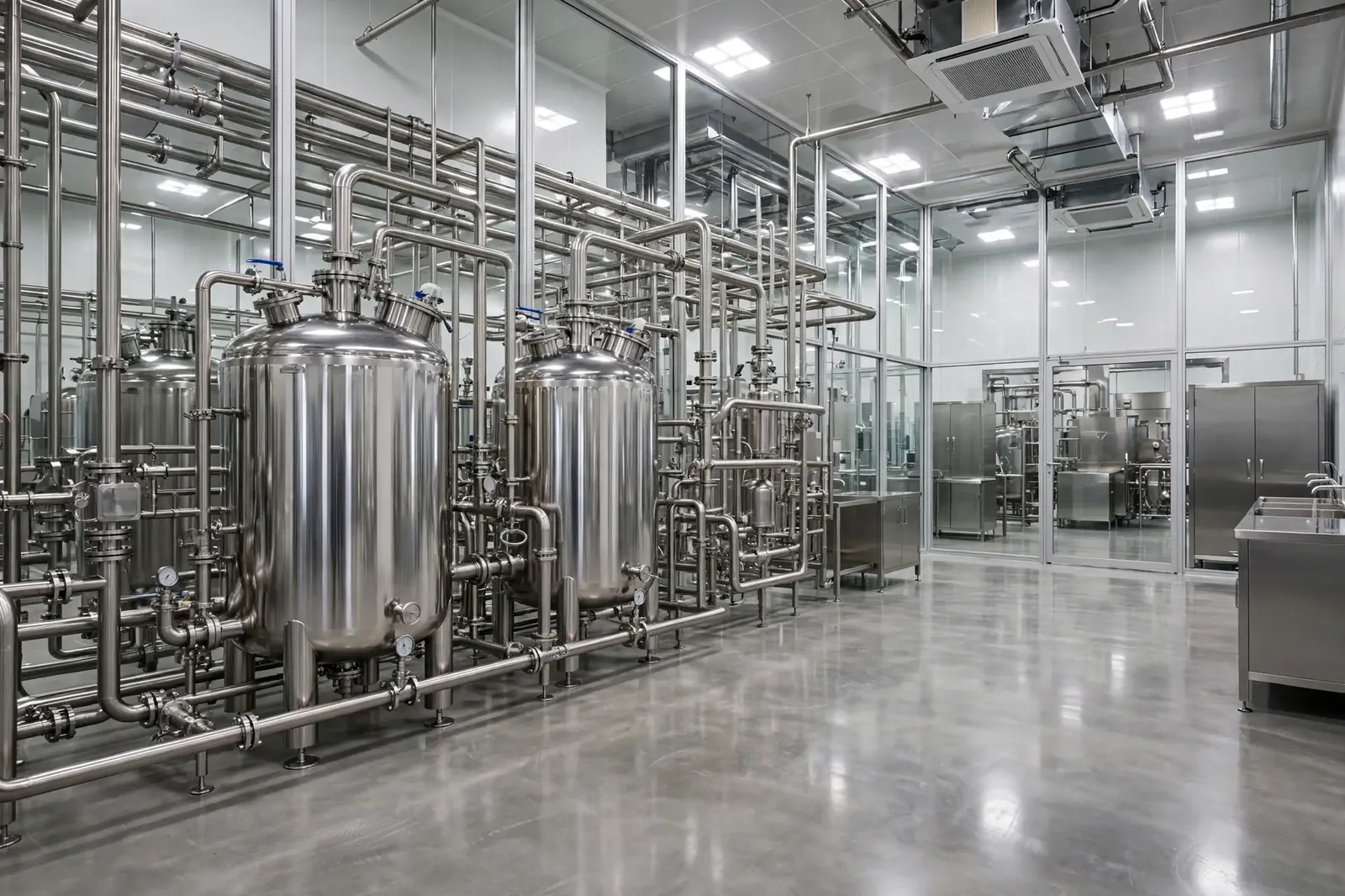
Shared lines, product changeovers, allergen runs — every switch between products is a contamination risk, and “visually clean” is not a limit. We build cleaning validation programs on justified residue limits, worst-case soils, and real sampling data, with special attention to the allergen changeovers that drive recalls in food plants.
Inspectors don't ask whether you cleaned. They ask how you know it worked.
Cleaning happens every day. The evidence that it worked often doesn't exist.
The cleaning record says the equipment looked clean. There is no residue limit, no analytical result, and no basis to claim one product didn't carry into the next.
Cleaning was validated on the easiest product on the easiest equipment — or never formally validated at all. Nobody can explain why the program covers the real risk.
Allergen to non-allergen runs happen on shared lines with a rinse and a hope. No validated procedure, no verification sampling, no record an inspector would accept.
Clean-in-place runs on timers and temperatures set years ago. The cycle was never challenged, never tied to residue data, and drifted with every undocumented tweak.
We start with the science — what must not carry over, and how little is acceptable — then design the program that proves it.
Residue limits derived from dose-based, toxicity-based, or allergen-threshold calculations, with the worst-case product and equipment selection documented and justified.
Cleaning procedures written for the people who execute them, and validation protocols with defined sampling locations, analytical methods, and acceptance criteria.
Swab and rinse sampling strategies, analytical method suitability, and three-run validation logic — evidence that the procedure works consistently, not once.
Changeover verification routines, periodic revalidation triggers, and new-product impact assessments — so the program stays valid as the product mix changes.
Cannabis is our home base — the method was built there first. The same evidence discipline serves each industry below, mapped to its own regulations.
Preventive controls, supplier verification, environmental monitoring, and traceability under 21 CFR Part 117 and FSMA.
Component qualification, master manufacturing records, and laboratory controls under 21 CFR Part 111.
Safety substantiation, GMP records, and adverse-event readiness under MoCRA.
Preventive controls for animal food, supplier programs, and sanitation under 21 CFR Part 507.
With an allergen map and a worst-case assessment: which allergens, which lines, which changeovers carry the most risk. Then validated cleaning procedures for those changeovers, with verification sampling — because undeclared allergens are a leading recall cause.
Visual inspection is a useful in-process check, not a validation endpoint. A defensible program needs specific analytical results against justified limits — at least for the worst-case validation runs.
From the data: therapeutic dose fractions, toxicological thresholds (such as PDE values where applicable), or allergen reference doses — with the most stringent applicable limit governing. Every limit gets a documented calculation, not a rule of thumb.
Yes. We characterize the current cycle, challenge it against worst-case soils with sampling data, and either validate it as-is or define the adjustments needed — documented honestly either way.
Yes — through grouping and worst-case bracketing. Products are grouped by cleanability and risk; the worst case in each group is validated with rationale covering the rest. One program, not dozens.
Start with a free call about your cleaning program — your limits, your changeovers, and what the evidence actually shows. We'll name your top 3 GMP risks and give you an honest fit assessment. No pressure, no pitch.